UNIT 2: ROADWAY SAFETY
page 9 of 29UNIT 2: ROADWAY SAFETY
NATIONAL ROADWAY SAFETY STRATEGY OFJECTIVES
Safer People Encourage safe, responsible driving and behavior by people who use our roads and create conditions that prioritize their ability to reach their destination unharmed.
The safety of people is U.S. DOT’s core mission. Enabling people to be safer includes actions to encourage safer behaviors among the driving public, commercial drivers, and all road users.
People generally use the roadway system in a safe manner on any given trip, but mistakes, lapses in judgment, and other more significant risky behaviors still occur.
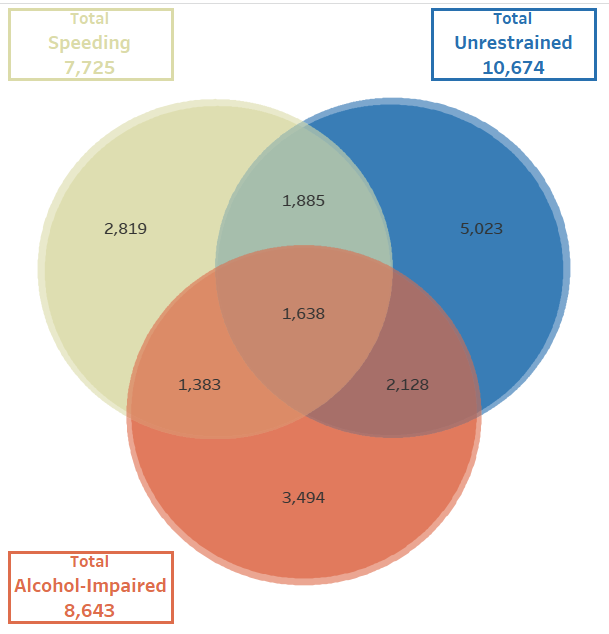
The three most frequent and persistent behavioral safety factors in fatal crashes are:
1. People in motor vehicles not wearing seat belts
2. Driving while impaired from alcohol
3. Speeding
The visual below highlights the impacts of these three critical behavioral safety factors in terms of passenger vehicle drivers involved in fatal crashes in 2020.
Behaviors of Passenger Vehicle Drivers Involved in Fatal Crashes
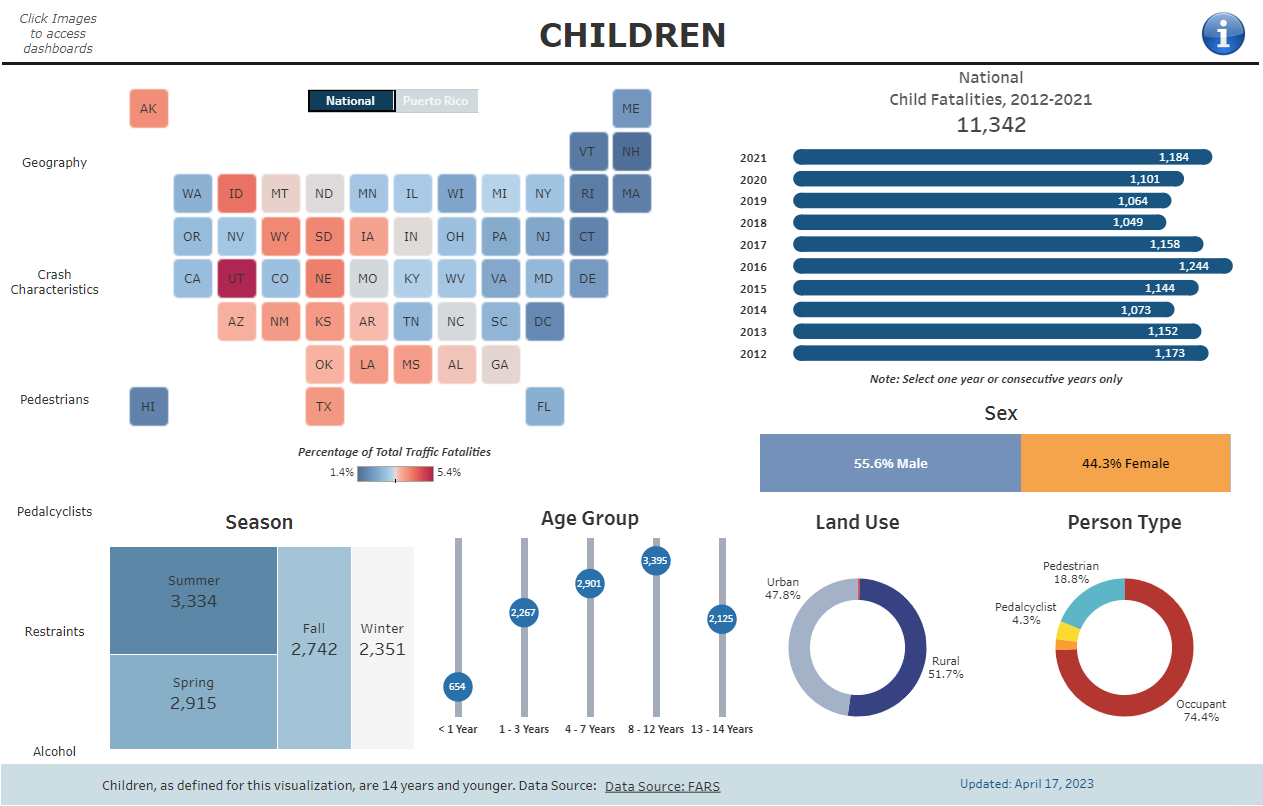
The Impacts of Roadway Fatalities for Pedestrians, Cyclists, Motorcyclists, and Children
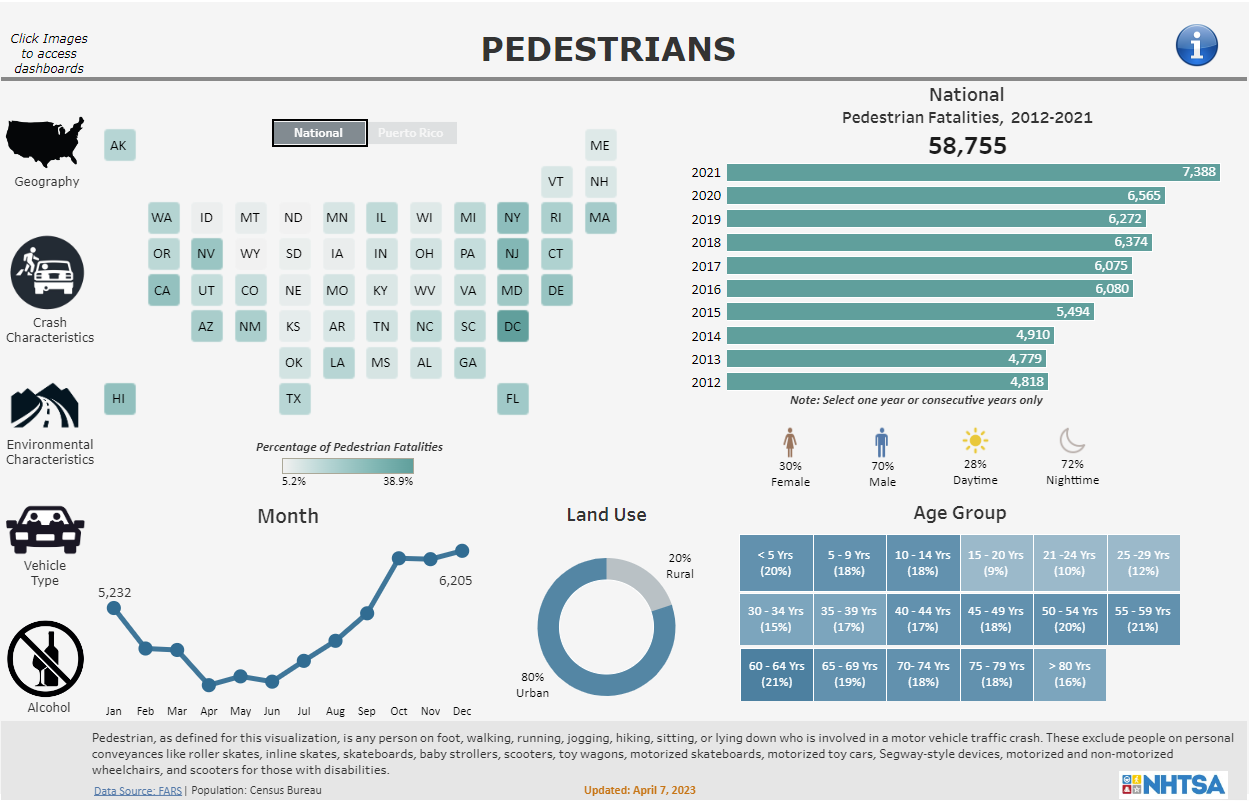
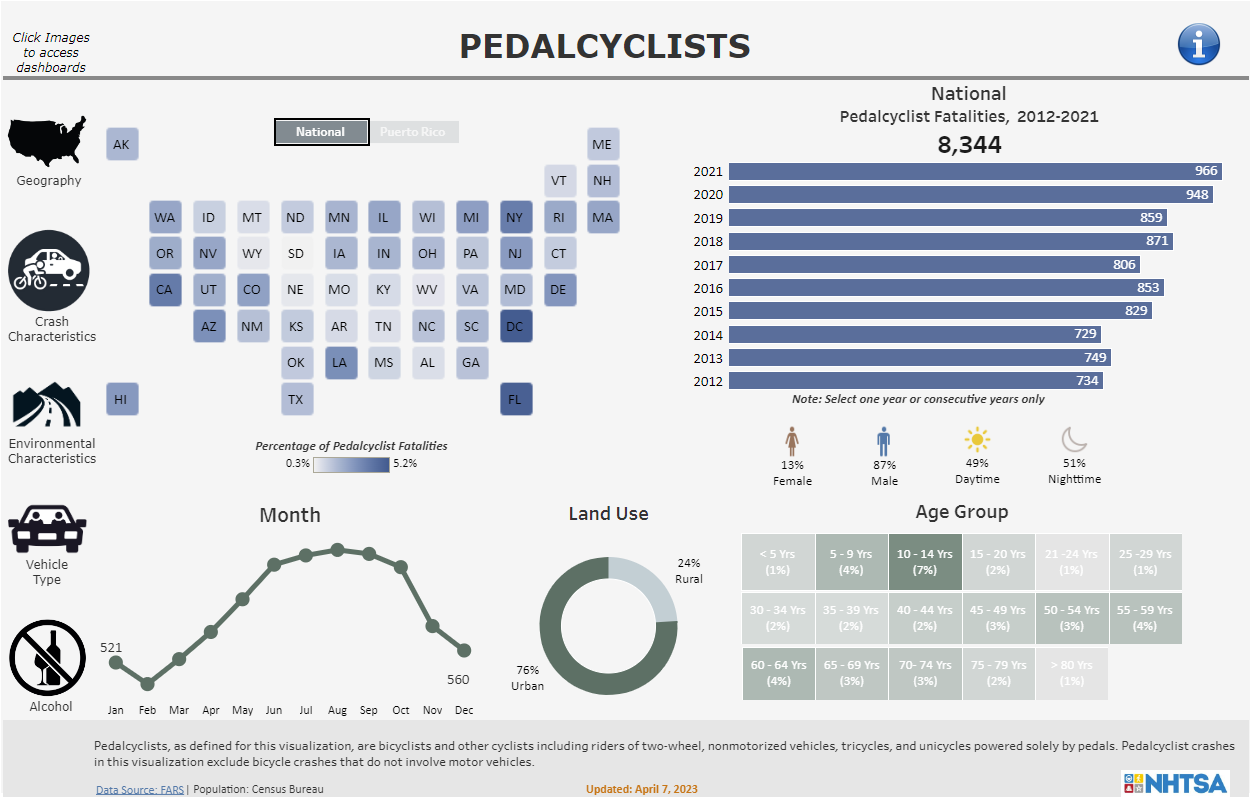
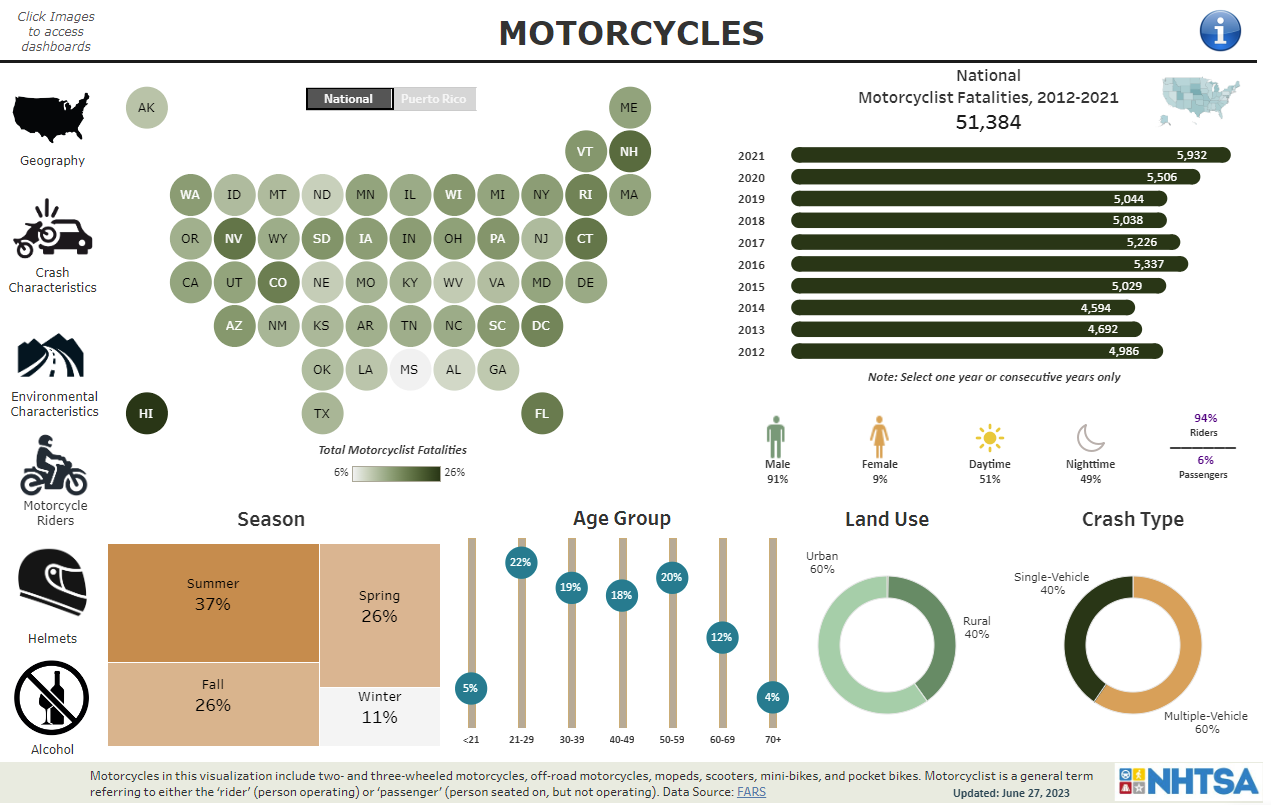
The below icons link to data visualizations that focus on some of the vulnerable groups who use our roadways. The information in these visualizations provides an opportunity to better understand the impacts of roadway fatalities for people who are walking, biking, riding motorcycles, or are children.
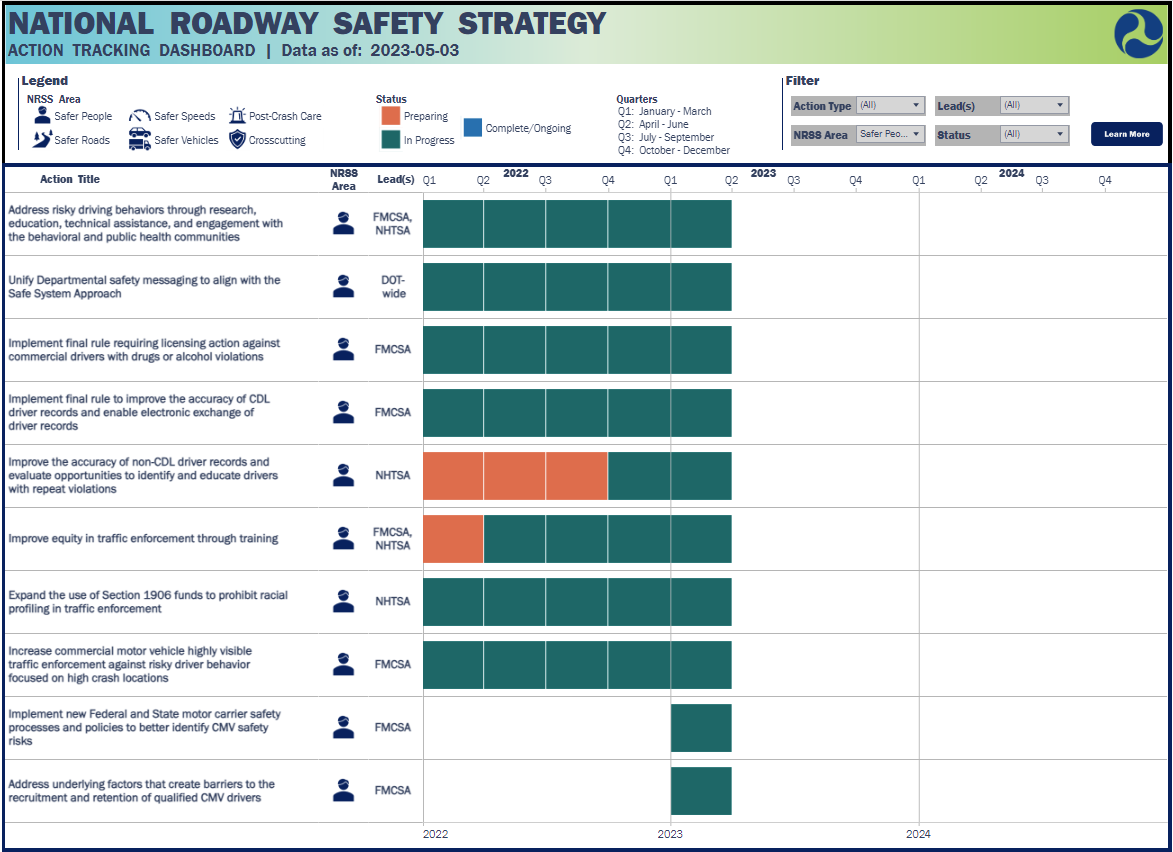
Key Departmental Actions to Enable Safer People
Safer Roads
 Design roadway environments to mitigate human mistakes and account for injury tolerances, to encourage safer behaviors, and to facilitate safe travel by the most vulnerable users.
Roadway design strongly influences how people use roadways. The environment around the roadway system—including land use and the intersections of highways, roads, and streets with other transportation modes such as rail and transit—also shapes the safety risks borne by the traveling public.
U.S. DOT has advanced an initiative to develop a growing collection of Proven Safety Countermeasures that offers effective strategies to reduce fatalities and serious injuries on our Nation’s roadways.
Transportation agencies are strongly encouraged to consider widespread implementation of countermeasures to accelerate the achievement of local, State, Tribal, and National safety goals. These strategies are designed for all road users and all types of roads—from rural to urban, from high-volume freeways to less traveled two-lane State and county roads, from signalized crossings to horizontal curves, and everything in between.
Proven Safety Countermeasures
The Proven Safety Countermeasures initiative is a collection of countermeasures and strategies effective in reducing roadway fatalities and serious injuries on our Nation’s highways.
The Proven Safety Countermeasures initiative is a collection of countermeasures and strategies effective in reducing roadway fatalities and serious injuries on our Nation’s highways.